
17.2.1 Relationships with regional NGOs and government for SDG policy
Last Updated:
- English
- Türkçe
17.2.1 Relationships with regional NGOs and government for SDG policy
Middle East Technical University (METU) has actively contributed to policy development processes conducted at the national and regional levels within the framework of the United Nations Sustainable Development Goals (SDGs), through its relavant Research and Application Centers. The university has collaborated with relavant public institutions and civil society organizations to identify existing problems in areas such as environmental sustainability, climate action, and energy efficiency, develop policy and strategy recommendations, and participate in monitoring and evaluating their implementation.
METU CLIMATE
In 2025, METU CLIMATE (Center for Climate Change and Sustainable Development) played an active role in platforms involving public entities (ministries, government bodies) and regional/national networks (UN SDSN Turkey, NGOs, disaster response teams), contributes science-based input to climate policies, and directly put the vision of SDG 17 (Partnerships for the Goals) into practice.
METU CLIMATE Contributed to Turkey’s Disaster Risk Management Roundtable Meeting
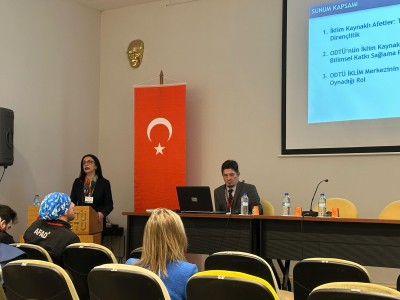
This event serves as an example of scaling up SDG-focused public policies and supporting climate-resilient institutional units by combining the University’s (METU CLIMATE) expertise with national climate constraints and field operations (disaster response teams/NGOs).
Scientific Alignment with National and Public Policies
Reference to Strategic Plans: METU CLIMATE provides a scientific foundation for climate-related resilience and green transition processes, drawing upon the 2024–2030 Climate Change Adaptation Strategy and Action Plan of the Republic of Türkiye’s Ministry of Environment, Urbanization and Climate Change.
Influencing the Public Agenda: It advocates for moving beyond the focus on "earthquakes"—which typically come to mind first when disasters are mentioned in Türkiye—to ensure that preparedness for and resilience against climate-induced disasters occupy a more prominent place on the national policy agenda.
Multi-Stakeholder Regional/National Cooperation Platform
Engagement with Public and Field Actors: The 27th Turkey Disaster Risk Management Roundtable Meeting created a platform for direct information sharing and dialogue by bringing together not only academics and researchers but also practitioners—such as disaster response teams and representatives from public institutions and civil society organizations (CSOs).
Science-Based Policy Development: The presentation addressed the institutional structuring and science-based policy development practices required for climate resilience, while also sharing scientific data and projections to support public decision-making processes.
Coordination Focused on UN Sustainable Development Goals (SDGs)
- Activities Aligned with SDGs: Research, projects, and publications conducted by METU and the METU CLIMATE Center are directly shaped in alignment with the United Nations Sustainable Development Goals.
- Institutional and Inter-Stakeholder Coordination: METU CLIMATE facilitates coordination among internal university units (faculties, institutes, and research centers) while also acting as a bridge to external stakeholders (government bodies and regional actors) regarding sustainability policies.
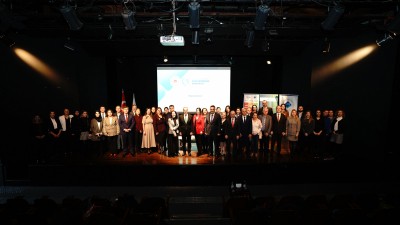
METU CLIMATE attends the UN SDSN Türkiye 10th Anniversary Event
https://iklim.metu.edu.tr/tr/news/odtu-iklim-un-sdsn-turkiye-10-yil-etkinliginde
Relations with Regional and National NGO/Network Stakeholders
- UN SDSN Türkiye Network Participation: ODTÜ İKLİM strengthened its regional and national network ties by participating in the 10th Anniversary Event of the UN SDSN (Sustainable Development Solutions Network) Turkey—an initiative established by the United Nations and hosted in Türkiye by Boğaziçi University.
- Multi-Stakeholder Dialogue: The event fostered SDG-focused collaboration by bringing together representatives from university administrations (Rectors, Vice-Rectors), public institutions, the private sector, and civil society organizations (CSOs).
Contribution to International and Regional Climate Policies
- COP29 and Current Developments: The meeting focused on the COP29 summit—a pivotal pillar of global climate policy—and recent developments.
- Sharing Policies and Strategies: Representing METU CLIMATE, Aslı Toksabay contributed to national and regional policy and implementation processes by presenting the center’s science-based work focused on sustainability, climate change, and the blue economy.
Partnerships Focused on UN Sustainable Development Goals (SDGs)
- SDG 17 (Partnerships for the Goals) Mission: By virtue of its structure, the UN SDSN fosters global and regional cooperation in areas such as climate, sustainable cities, the economy, and food by bringing together academia, public institutions, governments, think tanks, and NGOs.
- Science-Based Solutions: As an active member of this network, METU CLIMATE shares its scientific solutions for a sustainable future with public and civil society stakeholders.
METU GÜNAM (Center for Solar Energy Research and Applications)
GÜNAM’s 2025 activities extend beyond laboratory-scale research; by generating joint policies, workshops, and pilot projects with regional and national stakeholders—such as the Republic of Türkiye Ministry of Agriculture and Forestry, TKDK, TAGEM, and TFTP partners (public sector, industry, and civil society)—the center directly implements SDG 17 criteria.
1st Türkiye Photovoltaic Technologies Platform (TFTP) Workshop (May 16, 2025)
Scope and Participation: Held under the coordination of METU-GÜNAM, this broad-based workshop brought together over 130 stakeholders representing public institutions, academia, industry, and civil society. – Alignment with SDG 17: By bringing together public and civil sector actors around clean energy technologies under the university's leadership—and providing science-based contributions to public policies and national renewable energy strategies—this initiative directly supports this goal.
Agrivoltaics / "Pioneer Farmers" Workshop and Public Partnership:
"Agrivoltaic Pilot Facility" visits and workshops were organized as part of a process conducted in collaboration with the Republic of Türkiye Ministry of Agriculture and Forestry’s General Directorate of Agricultural Research and Policies (TAGEM) and its affiliated institutes. Alignment with SDG 17: These collaborative efforts—involving public researchers, local agricultural producers, and regional stakeholders and focused on integrating solar energy with agricultural production (agrivoltaics)—serve as a concrete example of a public-university-field partnership in the fields of food security and clean energy.
TKDK and METU-GÜNAM Cooperation Protocol (2025) – Strategic Public Partnership:
A cooperation protocol has been signed between the Agriculture and Rural Development Support Institution (TKDK) and METU-GÜNAM to promote renewable energy applications in rural areas. Alignment with SDG 17: This initiative entails the center providing technical and scientific guidance to public institutions to align public funds and rural development policies with renewable energy objectives.